



How to can Whole Pluots

Updated: Oct 13
Canning and preserving pluots allows you to enjoy them later either on their own or in another recipe. I really like using this recipe for the small pluots that aren’t really worth pitting but are a perfect bite-sized snack.
When you can pluots whole, you get jars of tender, sweet fruit that are ready for snacking, spooning over breakfast, or using in desserts later. This method is especially nice for smaller pluots because you don’t have to pit them before canning. Just wash them, prick the skins, pack them into jars, add sugar and hot water, and process them in a boiling water bath canner.
This recipe makes 4 pint jars of canned whole pluots. It’s simple, practical, and a great way to preserve fruit before it gets too soft on the counter.
Whole pluots are perfect for simple preserving
Pluots are a plum and apricot hybrid, and they behave a lot like plums in the kitchen. They’re juicy, sweet-tart, and soft enough to eat right from the jar once canned.
Canning them whole is a good choice when the fruit is:
Small
Firm-ripe
Hard to pit neatly
Too good to waste
Better suited for snacking than slicing
The pits stay inside the fruit, so these jars are best for eating at the table or using in recipes where you can remove the pits as you go. If you’re planning to make jam, pie filling, or anything blended, pitted fruit is usually easier. But for a quick preserved fruit that keeps beautifully on the shelf, whole pluots are wonderfully low effort.
I like this method because it keeps the fruit intact. The skins soften in the jar, the flesh turns syrupy, and the color looks beautiful lined up in the pantry.
Quick safety note: This recipe uses a boiling water bath canner, not a pressure canner. If you live above 1,000 feet, adjust the processing time for altitude.
Gather your ingredients and canning supplies
This recipe is written for 4 pint jars. If you have more fruit, you can scale it up, but it’s easiest to work in small batches if you’re new to canning.
Ingredients
Ingredient | Amount |
Fresh pluots | 2.5 pounds |
Granulated sugar | 8 tablespoons total |
Hot water | Enough to fill jars |
Optional bottled lemon juice | See note below |
You’ll add 2 tablespoons of sugar to each pint jar. The sugar helps create a light syrup in the jar once the hot water is added. Sugar isn’t what makes the fruit safe for canning, but it does help with flavor, texture, and color.
If your pluots are very mild or unusually low in tartness, you can add a little bottled lemon juice to each jar for brightness. Use bottled lemon juice instead of fresh if you’re adding it for consistency. That said, most plum-style fruits are naturally acidic enough for water bath canning when using a tested fruit-canning style method.
Equipment
You’ll need:
4 clean pint canning jars
New canning lids
Bubble remover or clean chopstick
Damp cloth or paper towel
Heat-safe surface for cooling jars
Before you begin, check your jars for chips or cracks. Run your finger gently around each rim. A nicked rim can keep a jar from sealing properly.
Wash the jars, lids, and bands. Keep the jars hot until you’re ready to fill them. Hot jars help prevent breakage when you add hot water and place them in the canner.
Prepare the pluots and pack the jars
Start with ripe but firm pluots. Overripe fruit can turn mushy during processing, while underripe fruit may taste flat once canned. The sweet spot is fruit that smells good, gives just slightly when pressed, and still holds its shape.
Wash the pluots well under cool running water. Remove stems and leaves, and set aside any fruit with bruises, mold, cracks, or soft spots.
Next, prick the skin of each pluot. You can use a clean toothpick, skewer, or fork. Pricking the skin helps keep the fruit from splitting too much in the jar and allows the syrup to move through the fruit more evenly.
You don’t need to peel the pluots. The skins soften during canning, and they help the fruit hold together.

Pack the jars
Place a canning funnel on top of a hot pint jar. Pack the whole pluots into the jar, fitting them in snugly without crushing them.
Add 2 tablespoons of sugar over the fruit.
Pour hot water into the jar, covering the pluots while leaving 1/2 inch headspace at the top. Headspace is the empty space between the surface of the liquid and the rim of the jar. That space matters because the contents expand during processing.
Use a bubble remover or clean chopstick to gently release trapped air bubbles. Slide it down along the inside edge of the jar in a few places. If the liquid level drops, add more hot water to bring it back to 1/2 inch headspace.
Repeat with the remaining jars.

Before the lids go on
Wipe each jar rim with a clean damp cloth. This step is small, but don’t skip it. Sugar syrup or fruit juice on the rim can interfere with the seal.
Place the lids on the jars, then screw the bands on until fingertip tight. That means snug, but not cranked down hard. Air needs to escape from the jars during processing so the lids can seal properly as they cool.
(For quality, American made Superb canning lids and jars follow this link and use the coupon code WP20 to get 20% off your purchase.)
Process the pluots in a boiling water bath
Make sure your boiling water bath canner has enough water to cover the filled jars by at least 1 inch. The jars should sit on a rack, not directly on the bottom of the pot.
Lower the filled jars into the canner using a jar lifter. If the water stops boiling, put the lid on the canner and bring it back to a full rolling boil before you start timing.
Process pint jars of whole pluots for 25 minutes at 0 to 1,000 feet elevation.
If you’re above 1,000 feet, increase the processing time. With water bath canning, you adjust the time, not the pressure.
Elevation | Processing time for pint jars |
0 to 1,000 feet | 25 minutes |
1,001 to 3,000 feet | 30 minutes |
3,001 to 6,000 feet | 35 minutes |
6,001 to 8,000 feet | 40 minutes |
8,001 to 10,000 feet | 45 minutes |
Once the jars have processed for the correct time, turn off the heat. Remove the canner lid carefully, opening it away from your face so the steam doesn’t hit you.
Let the jars sit in the hot water for 5 minutes before removing them. This short rest helps reduce siphoning, which is when liquid leaks out of jars after processing.
Lift the jars straight up and place them on a heat-safe surface. A folded towel, wooden board, or heat-safe mat works well. Keep the jars upright, and don’t tilt them to remove water from the lids.
Now leave them alone for 24 hours. Don’t tighten the bands. Don’t press the lids while they’re hot. Don’t move the jars around if you can help it.
The quiet part of canning is sometimes the hardest part.
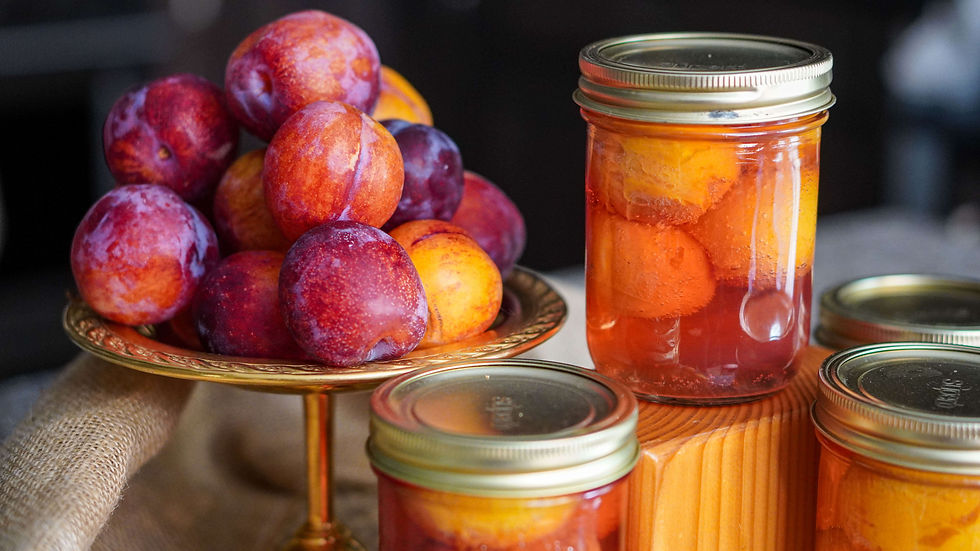
Check seals by pressing the center of lids; they should not flex up and down.
If your jar of preserved whole plums did not seal then place it in the fridge and use it immediately. Store the sealed jars in a cool, dry, dark location to enjoy for the next 1-3 years. After three years the nutritional value of canned food diminishes.
If you have any questions about canning with the boiling water canner or how to adjust the pressure for altitude, take a look at my canning basics videos.
How to use canned whole pluots
These preserved pluots are lovely straight from the jar, especially when chilled. Just remember that the pits are still inside.
They’re also easy to work into everyday meals and desserts. Try them:
Spooned over oatmeal or yogurt
Served with pancakes, waffles, or French toast
Warmed gently and served with vanilla ice cream
Chopped after pitting and added to crisps or cobblers
Served with roasted pork or chicken
Packed into lunch as a sweet fruit snack
Simmered into a quick fruit sauce after removing the pits
The syrup in the jar is worth saving too. You can drizzle it over breakfast, stir it into sparkling water, or use it as part of the liquid in a fruit dessert.
If you want a thicker sauce, remove the pluots from the jar, take out the pits, and simmer the fruit and syrup together in a small saucepan. Mash lightly as it cooks. In a few minutes, you’ll have a quick pluot topping for biscuits, ice cream, cheesecake, or toast.
A few tips for better jars
A simple recipe still leaves room for small details that make the finished jars better.
Choose similar-sized fruit.
When the pluots are close in size, they pack more evenly and heat more evenly in the jar.
Don’t overpack the jars.
Snug is fine. Squashed is not. Leave enough room for hot water to move around the fruit.
Use hot water, not cold.
Hot water helps the jars heat evenly in the canner and reduces the risk of thermal shock.
Measure the headspace.
Too much liquid can siphon out. Too little liquid can leave fruit exposed. Aim for 1/2 inch.
Let the jars cool slowly.
A drafty spot can cause jars to cool unevenly. Set them somewhere they won’t be bumped or chilled.
Label the jars right away.
It’s surprisingly easy to forget what you canned and when, especially once your pantry starts filling up.
Homemade canned pluots are worth the shelf space
Canning whole pluots is one of the easiest ways to save a small harvest, a farmers market deal, or a bowl of fruit that needs attention before it softens. You don’t have to peel them, pit them, or turn them into anything complicated.
Wash, prick, pack, sweeten, cover with hot water, and process.
That’s it.
Once the jars are sealed and tucked away, you’ve got sweet whole pluots ready for snacks, breakfasts, desserts, and simple recipes long after fresh pluot season is over.




Comments